Tag: 175years

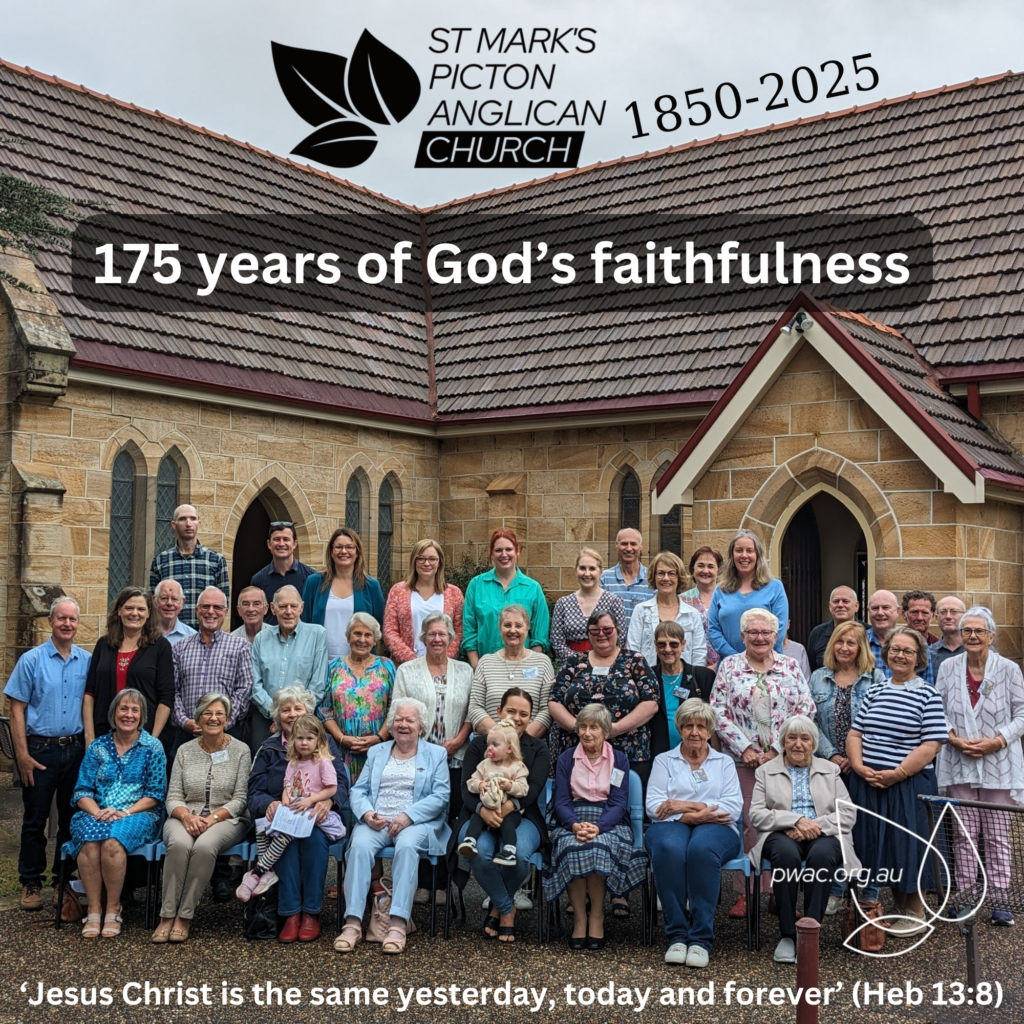
A collection of stories celebrating God’s faithfulness over 175 years at the 175th Anniversary of St Mark’s Anglican Church (16th July 2025).

Arthur Anderton

**This is an interview with fictional congregation member Arthur Anderton as a part of a series to commemorate 175 years of St. Mark’s Anglican Church.**

The foundation stone of St. Marks was laid in 1850 by Reverend E. Rogers.

The church was completed in 1856 but was at first just a tiny building, receiving extensions over subsequent years. A little over 100 years later, I began attending services at St. Marks with my family after moving to Picton from northern NSW. St Mark’s had its centenary celebration in 1958, and I had the pleasure of unveiling the new communion table which served as a memorial to the Larkins, a founding family  of St. Marks. Ms Jane Eva Larkin was the beloved Superintendent of the Sunday School for many years until she passed away in 1944. Some former attendees of the Sunday School were present during the unveiling of the communion table, now adults with children of their own. It felt a very special occasion to be a part of. 

At the celebration, I was introduced to some of the most faithful long-standing members of St. Mark’s, including a very expressive one: the organ. Did you know that before electricity, the organ was operated by a manual blower? Yes, the church employed a person whose job it was to stand near the back of the organ and work the handle of the pump so that it delivered air to the organ. That’s something we can’t quite picture happening at today’s services! The organ continues to be a part of the worship music ensemble at St. Mark’s. Although its absence in the future would in no way take away from the legitimacy of worship on Sundays, it is still a nice little nod to the past. 

In the two decades after the foundation stone of St. Marks was laid, Picton’s population almost tripled, and with that came a growing need for more worship meetings, not only at St. Mark’s but in other areas making up what we know as the Wollondilly. In the 1920’s, the parish Reverend Powys wrote of travelling 4,000 miles in one year by motor car and horse to attend various services within the expansive Picton parish! Fortunately, we don’t have to cross rough tracks for miles or flooded rivers to attend services. I like to think of this as a reminder of how earnest and faithful people were about meeting together as Christians in worship of God.

The building and grounds at St. Marks carries with it an abundance of priceless history about its pioneering members, architecture and purpose. Brick-by-brick the church was built, and underwent multiple changes in structure over time – several new roofs, for instance. The people of St. Mark’s have also been built up, have changed, have been reinforced and renewed by our good God, the best architect and planner of our lives. A lot changed in Picton over 100 years, and more still over the 75 years that followed on. You can imagine how bustling Picton town is today in comparison to when the site for St. Mark’s was first considered by Major Henry Antill. I take comfort in what will never change – what is eternal, regardless of how a building might weather; how faces will change and populations will grow. God will always remain with his people. 

Written by Rachel Winn
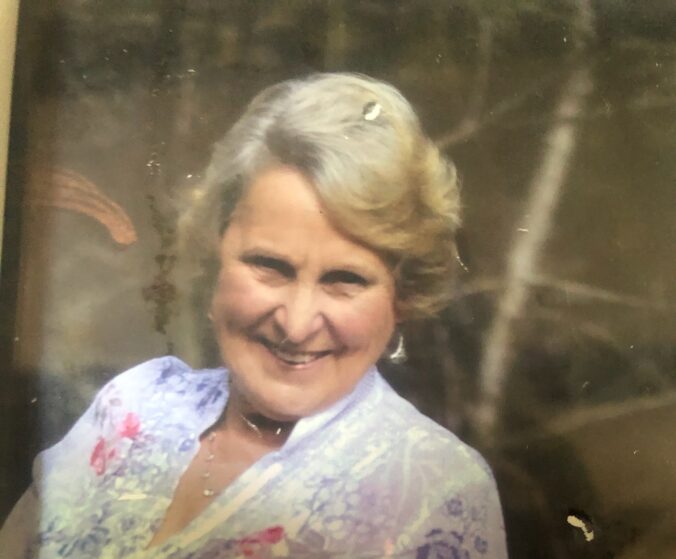
175 Years: An Interview with Joan Brown

*This interview is a part of a series to commemorate 175 years of St. Mark’s Anglican Church.*

You have a very in-depth connection with St. Mark’s going back a number of years!

My first beautiful memories of St. Mark’s was as a small child visiting the resting places of my great-grandparents, who had arrived in Picton (from Ireland) after a long sea voyage as young children in 1848, and began farming in a wonderful valley North of Picton. The church was built in 1850, so they were here at the very beginning of the opening of the church and formed the foundation, along with other pioneer families, for St. Marks. 

The cemetery on the grounds of St. Mark’s is also a local historic landmark and has a special connection to your family. Can you tell us about that?

I recall listening quietly to my Grandmother and mother lovingly talking about these special people who I had never met – as incredibly strong, loving, and devout Christians who helped begin the early settlement of Picton. I adored bringing fresh flowers to their headstones and saying a special prayer of thanks for being part of a strong, caring and safe community under the special care of our loving God. 

What are some important moments throughout your life that were spent at St. Mark’s? 

In 1939, I was Christened by Rev. Fred Shaw at the church’s font that still remains today for our babies, and later in my high school years was confirmed by Rev. Barry Schofield. We had Sunday School here when we were children. In 1962, my husband, Garry Brown and I were married here with organist Mrs. Ingleton’s daughter, Joan playing for us, and in 1967 our dear baby Michael was also christened here. 

In your view, what impact has the church had on the lives of its congregation members?

The friendships and wonderfully kind community here has always been a caring atmosphere to visit; with family, friends and visitors always welcome with warmth and open arms. The people who have come to church here have become very, very close friends, which has been that way since my family first came here. Our congregation has been blessed to have our present Senior Minister, Ben, and assistant Greg, as well as an engaging team who are dedicated to PWAC. I never wake in the mornings without giving thanks to God for this outstandingly safe and friendly place, in the best country on Earth to grow up and rear a beautiful family. 

Interviewed by Rachel Winn.

John & Eileen Bicknell

Interview with John & Eileen Bicknell

This interview is a part of a series to commemorate 175 years of St. Mark’s Anglican Church.

When did you start attending St. Mark’s? What was church life like for you then?

John: In 1949. St. Mark’s was the church that we “Barnado Boys” – stationed at Mowbray Park Farm Training School – attended at times, upon migrating from England after the Second World War.

Eileen: I came to St Mark’s Parish at the end of 1956. I was confirmed at St. Marks in 1964, but in about ‘65/’66, I started attending a big youth group that the Parish had on a Saturday evening. Forty to fifty teenagers and above were in this big group. So I met John there but I wasn’t dating. I was there with three of my brothers.

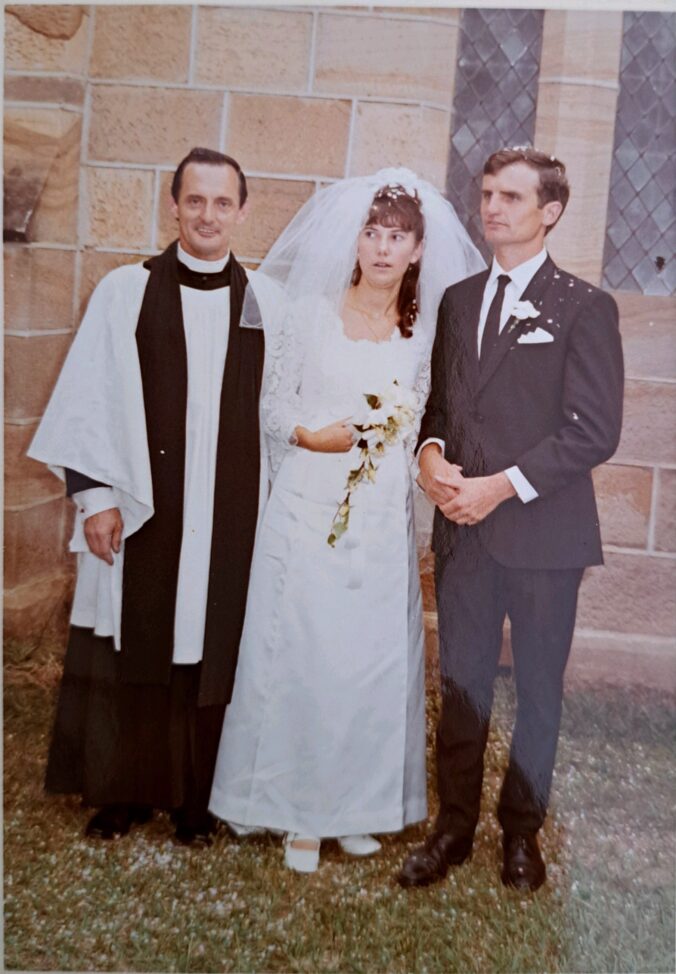
John: Before Eileen and I married, I was co-opted into driving Picton High School students to the youth group held in the rectory, on what is now Remembrance Drive; the Reverend Barry “JB” Schofield presiding. I was about 25 years old then, perhaps younger. Many of those students became Christians. Some became very long lasting friends. [JB is pictured alongside John & Eileen in the accompanying photo.]

Eileen, what can you remember about your marriage proposal from John?

I was nursing, and it was 4 years (of training) in those days, and we were dating. We’d been dating for 8 or 12 months or so… John asked if I was going to do midwifery. And he’d already told me that he wanted 12 children! I thought, no, I don’t want to do midwifery if I’m going to have 12 children. So I said I’d be interested in doing psychiatry nursing. John said, “How long does that take?”, and I said, “Two years.” So he said no, we’ll get married instead. Later on he did give a romantic proposal, at Manly Beach.

Your wedding ceremony was held at St. Mark’s. What can you share with us about that special day?

Eileen: It was a lovely day. I think we had a 5pm evening wedding, on March 13th, 1971. We’re not superstitious so that didn’t worry us. Everything went along nicely. The church then didn’t look much different than it does now. The font for baptism was at the other end of the church when you first came into the double doors. There was no technology centre for screens on the wall. Everything was in books in those days; all the service, all the songs. Lots of our family and friends came. John didn’t have that many family but there were locals from Lakesland, where he lived.

John: I had no idea what I was doing. (Laughs). No, it was a fantastic wedding. All I was concerned with was making sure I said yes!

Following your marriage you remained a part of the congregation at St Mark’s for years.

John: Our 4 children were all christened in St. Mark’s. I held many positions over the years, including as the Treasurer for about thirty years. I’ve attended marriages, funerals, and many a working bee – especially after floods swept through the building.

Thanks, John & Eileen!

Interviewed by Rachel Winn

175 years of St Mark’s: Interview with Charlie Dunn

**This interview is a part of a series to commemorate 175 years of St. Mark’s Anglican Church.**

When did you start attending church at St. Mark’s,  and what are some of your early memories of the church?

I started coming to St. Mark’s in about 1966. My mother and father, who lived in Redbank, in Upper Picton, got a housing commission down on Menangle Street. We moved from the Methodist church in Redbank to start attending St. Mark’s. I don’t have many memories of St. Mark’s at that stage because of being so young, but as time went on I went to Sunday School. There were no actual rooms for Sunday School: in one part of the church you’d have the first class, in another part you’d have the second class, in another part you’d have kindergarten…right up to the sixth class and high school. The members of the congregation in the morning would go outside and sit on stools and they would listen to the Rector give a sermon, while the children would have their Sunday Schools classes in the church building. In the mid-eighties there was a cottage set up (outside the church building). A friend of mine, Barry, and his wife, Denise, became the youth pastors, and they ran and based an outreach in the cottage, with their young family. The cottage is gone now but from that, about 10 or more young people became strong Christians and went off into ministry, as missionaries overseas with YWAM, and some also attended bible college. The best thing was, everybody that came to St. Mark’s was accepted for who they were. There was no groups of friends and such. Everybody was accepted, everybody was loved. What attracts people to church is, I believe, a strong group of Christians who are open to sharing and caring and accepting people.

What are some ways that the church engaged with the congregation and community during this time?

St. Mark’s in that time used to have missionary conventions. These were held in Victoria Park on Menangle Street, in the agricultural hall. It would run for one week, starting on a Saturday and finishing the following Saturday. Basically, every night they would have movies or a speaker from a different mission from around the world who would come and talk about a variety of things. Many people were saved because the Rector (of St. Marks) would give altar calls, where people could come and receive Jesus. The convention went on for about 20 years, from around 1956 to about 1976. There were thousands of people  visiting over the twenty years and many peoples’ lives were changed.

In the early seventies, the Rector, JB Schofield, bought a double decker bus, which the church paid for and looked after. That bus was used from about 1972, right up until JB retired in 2000. It was used for many different things: we went on Outback safaris to Coopers Creek and Cameron’s Corner; we went to South Australia and the Flinders Ranges and to Coonabarabran and the Warrenbungles. St. Mark’s was always a place that was exciting – there was always something happening. We were always doing something adventurous. The bus would collect kids from the high school, from year 7 to year 9. They would come down for 2 hours first thing in the morning to have a seminar in the church, where they would black the windows out to make it look like a picture theatre. The children weren’t “churched” at all, so, there was one time, I remember, when the lights came on, and one of the ushers – we had to have ushers to make sure the kids were under control – found a young couple having a pash! The church would be packed. Upstairs, downstairs… the Rector would sometimes show a movie and the kids loved it – it was getting out of school, it was something different, it was an excursion. That was held once a month on a Thursday. The bus and the fellowship and the friendship of people is what made St. Mark’s what it was, along with good bible teaching, prayer and leadership. Church has changed and people change; at the moment it is a different demographic, but who knows what’s going to happen in the next 10 years? It could all change again.

It’s amazing where St. Mark’s is today. Who knows what the next adventure is.

Interviewed by Rachel Winn.

Christmas Service Times: 24 Dec 7pm @ Wilton, 11pm @ Picton; 25 Dec 9am at both Picton and at Wilton. More details:

Wilton Carols 2024

Easter Service Times - come celebrate Easter with us!

Sundays 9am @ Picton; 10am and 5pm @ Wilton (both with Kids Program). Also livestreamed on YouTube.

 - Explore the Christian faith over four meals!